
How to Test Boat Batteries and Troubleshoot a 24V Trolling Motor
A trolling motor that suddenly loses power can make you think the motor itself has failed. Sometimes the real problem is much simpler: one weak battery in the system. If you run a 24V trolling motor from two 12V marine batteries, both batteries need to be healthy and properly charged for the system to perform the way it should.
In this guide, we will walk through a practical way to test boat batteries with a voltmeter, find a weak battery, and understand the basics of a two-bank onboard charger on a 24V trolling-motor setup.
Why a 24V Trolling Motor Can Have a Battery Problem
A 24V trolling motor setup normally uses two 12V batteries connected in series. The system depends on both batteries. If one battery is weak, damaged, or not holding a charge, the trolling motor may run poorly even though the other battery looks perfectly healthy.
This is why checking the batteries individually is important. Measuring only the total voltage of the 24V system can hide the fact that one battery is significantly weaker than the other.
What You Need to Test Boat Batteries
- A digital multimeter or voltmeter
- Access to the individual battery terminals
- A properly charged battery system
- Safety glasses and appropriate protective equipment
Set the meter to DC voltage and verify that the meter is working correctly before testing the batteries.
How to Test Each 12V Marine Battery
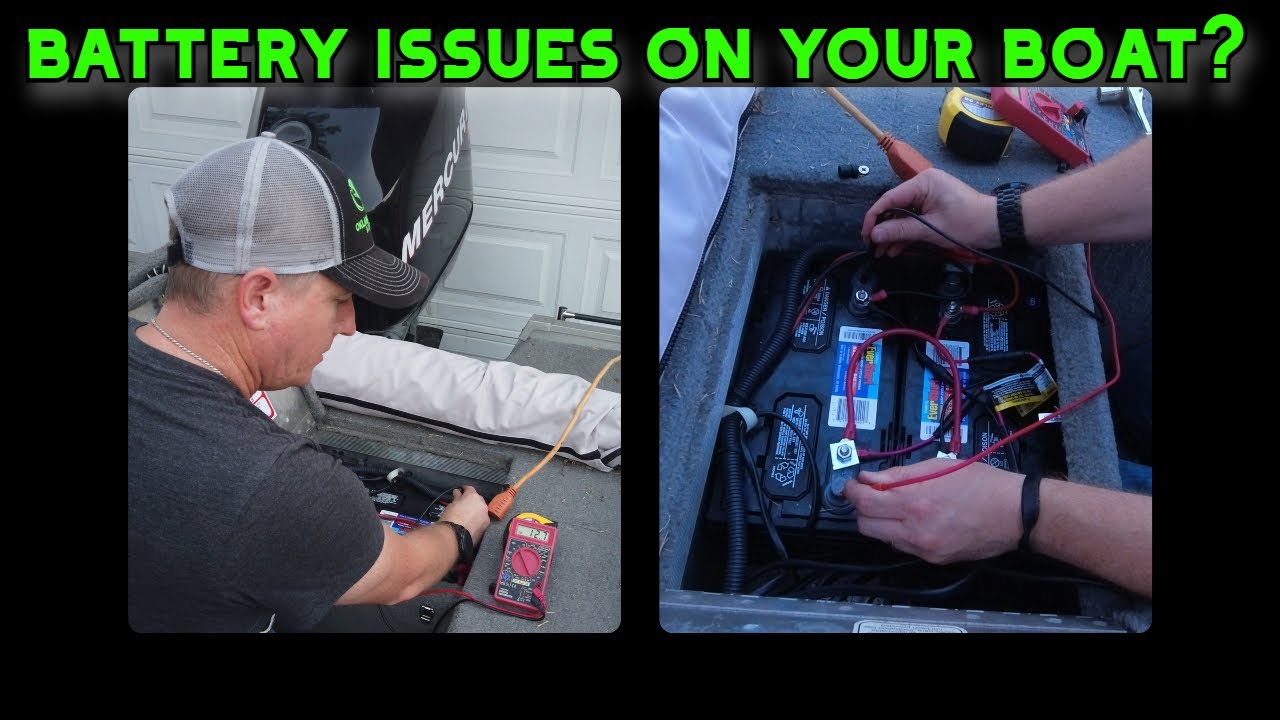
Disconnect the trolling motor load if practical and test the batteries individually. Place the positive meter probe on the positive terminal and the negative probe on the negative terminal.
A healthy, fully charged 12V lead-acid battery will generally be around 12.6 to 12.8 volts at rest, although the exact reading depends on battery type, temperature, state of charge, and how long the battery has rested. A reading that is substantially lower than expected after charging is a reason to investigate further.
In our case, one battery was reading around 13 volts while the other was only holding around 10 volts after charging. That large difference was enough to point directly at the weak battery rather than the trolling motor.
Do Not Assume a Battery Is Good Just Because the Charger Says It Is
A charger indicator can tell you that a charging cycle has completed, but it does not necessarily prove that a battery can store and deliver power normally. A battery can appear charged and still have an internal problem or lose voltage quickly under load.
If one battery repeatedly shows an abnormal voltage after being charged and allowed to rest, it deserves further testing or replacement. A proper battery load test can provide additional information when a simple voltage check is not enough.
Why You Should Check Both Batteries in a 24V System
When two 12V batteries are used in series for a 24V trolling motor, replacing only the obviously bad battery is not always the best long-term approach. Batteries of different ages or conditions can behave differently and may not provide balanced performance.
If the batteries are relatively old or one has failed, replacing the pair with matched batteries can help keep the system consistent. Always follow the battery manufacturer’s recommendations for replacement and charging.
How Two 12V Batteries Make 24 Volts
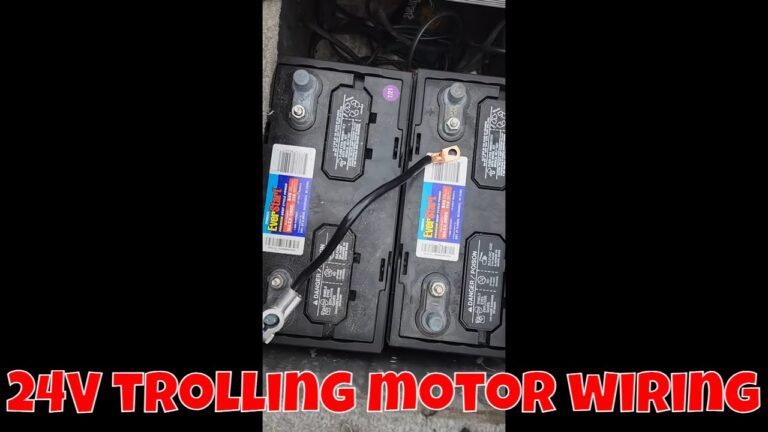
A series connection adds the voltage of the two batteries together. The positive terminal of one battery connects to the negative terminal of the other. The trolling motor’s positive and negative leads then connect to the two remaining terminals.
That produces a nominal 24V supply while the individual batteries remain 12V batteries.
For a more detailed walkthrough of the wiring itself, see How to Wire Two 12V Batteries for a 24V Trolling Motor.
Using a Two-Bank Onboard Charger
A two-bank onboard charger is designed to charge the two batteries independently while they are part of the same 24V series system. Each charging bank connects to its corresponding battery according to the charger’s installation instructions.
This arrangement allows the charger to monitor and charge each battery rather than treating the entire series-connected pair as one large battery. Correct polarity and proper charger connections are critical.
Troubleshooting a Trolling Motor That Is Running Weak
If your trolling motor suddenly has very little power, work through the problem methodically:
- Check the battery connections for corrosion, looseness, or damaged cables.
- Fully charge the batteries according to the battery and charger manufacturer’s instructions.
- Measure each 12V battery individually with a voltmeter.
- Compare the readings instead of looking only at the total 24V system voltage.
- If one battery is significantly lower or will not hold its charge, have it tested.
- Inspect the trolling motor wiring, breaker, fuse, and connections if the batteries test good.
Common Mistakes to Avoid
- Testing only the combined 24V voltage: One weak battery can be hidden by the total reading.
- Trusting the charger indicator alone: A completed charging cycle does not guarantee a healthy battery.
- Ignoring connections: Loose or corroded terminals can cause voltage drop and poor motor performance.
- Mixing mismatched batteries: Different ages, capacities, or conditions can make a series system harder to manage.
- Skipping load testing: Resting voltage is useful, but it cannot reveal every battery problem.
Watch the Original Oklahoma Fishing Adventure Video
In the original video, we troubleshoot a weak trolling-motor battery, demonstrate how to check the batteries with a voltmeter, and go over the two-bank onboard charger used with the 24V system.
Watch: New Batteries Going Bad Fast? This Could Be Why
Final Thoughts
When a 24V trolling motor is not performing correctly, do not immediately assume the motor has failed. Start with the batteries, connections, and wiring. Testing each 12V battery individually with a voltmeter is a simple first step that can quickly reveal whether one battery is the weak link.
If you find a battery with an abnormal reading, investigate it before heading back to the lake. A few minutes with a meter can save you from discovering a weak battery after you launch the boat.