Best Bait for Stocked Trout: How to Fish Oklahoma Ponds
Looking for the best bait for stocked trout? In Oklahoma ponds, start with floating trout dough bait on a light bottom rig, then try a small inline spinner or micro jig if you want to cover more water. These presentations target stocked trout without relying on live bait.
Affiliate disclosure: As an Amazon Associate, OFA earns from qualifying purchases.
1. Floating trout dough bait
Prepared trout dough bait, such as Berkley PowerBait Trout Bait, is a practical first choice for still water. Carry a couple of colors. If trout ignore one, try another.
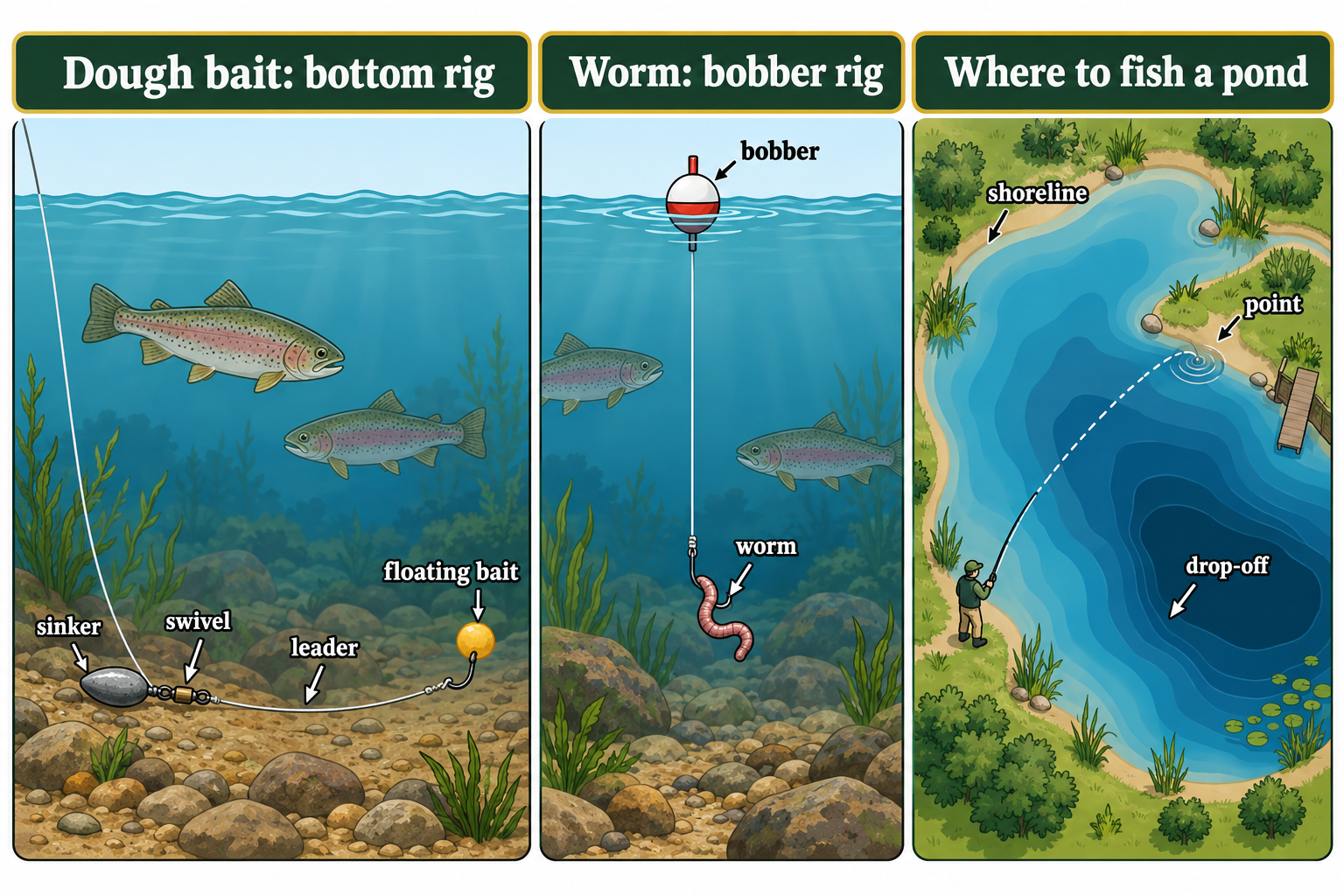
How to rig dough bait
- Thread the main line through a small sliding sinker.
- Tie the main line to a swivel.
- Attach an 18- to 24-inch leader and a small bait hook, around size 10 to 14.
- Mold a small piece of dough around the hook, keeping the hook point close to the surface.
- Check that the dough floats the hook a few inches above the bottom.
For a pond, a light sinker around ¼ ounce is a reasonable starting point. The sinker should rest on the bottom while the bait floats above it.
How to fish it
Cast past a likely feeding area and let the rig settle. Reel in slack until the line is just snug, then watch the rod tip. Trout may peck at the bait before taking it, so wait for steady pressure or repeated pulls before setting the hook. ODWC describes bottom fishing as an effective approach for small trout ponds in its small-pond trout guide.
2. Small inline spinners
A small inline spinner is a good choice when trout are chasing food and you want to cover water. See small trout spinners on Amazon.
Use light line and cast past the area you want to cover. Reel slowly enough for the blade to turn. If a steady retrieve doesn’t draw a strike, vary the speed or pause briefly. Try a different angle along the bank before changing lures.
3. Micro jigs
Small jigs with soft-plastic bodies are artificial lures that can be fished under a bobber or cast and retrieved. Shop trout micro jigs on Amazon.
How to rig and fish a micro jig
Tie the jig directly to light line. To fish it under a bobber, set the jig about 12 to 18 inches below the float and let it drift, adding a slight twitch now and then. Without a bobber, cast near a point or drop-off and retrieve slowly with small pauses. If trout follow but don’t strike, try a smaller jig or slower presentation.
Can you use live bait at Close to Home trout ponds?
Check the rules for the exact pond before bringing worms, minnows, or other live bait. ODWC’s statewide Close to Home page lists rod-and-reel, hook, and other restrictions but does not state a blanket live-bait ban; the department’s small-pond trout guide also lists natural and prepared bait options. Local rules or posted signs can add restrictions, so confirm with the pond operator if you’re unsure. This article focuses on prepared dough bait and artificial lures as straightforward choices.
See ODWC’s current Close to Home rules and its trout-area information before you go.
General tips for fishing stocked-trout ponds
- Check stocking and access information first. Stocking schedules and active waters can change. Confirm current conditions with ODWC before driving.
- Start close to shore. Trout may cruise near the bank. Try points, shallow coves, and the edge where shallow water drops deeper.
- Cover water. If one spot is quiet, move along the bank and test another depth.
- Fish lightly. ODWC recommends ultralight tackle and 4- to 6-pound line for trout. Check the specific water’s rules before choosing hooks and rigs.
- Watch for subtle bites. With dough bait, wait for steady pressure. With a bobber, look for a clear dip or sideways movement.
- Try another presentation. Start with dough bait on the bottom. If you see surface activity, try a spinner or jig.
- Follow license and permit requirements. Local permits may apply in addition to a state license.
- Clean and dry gear between waters to help prevent spreading aquatic nuisance organisms.
For a broader overview of destinations, seasons, and rules, see OFA’s Oklahoma trout fishing guide. For license basics, visit our Oklahoma fishing license guide.